
Review: ‘The Bride!’ is alive with audacious energy and post-#MeToo outrage
2026 / Dir. Maggie Gyllenhaal
Rating: 3.5/5
Watch if you like: a mashup of Poor Things and Joker: Folie à Deux (if it wasn’t awful), goth Halloween costume ideas, or finding refuge in musical theater as a high schooler.
I described The Bride! on the way home from the theater to a friend as “raw theater goth kid Bonnie and Clyde Me Too anger,” and that still seems to be the best way to start talking about Maggie Gyllenhaal’s audacious second feature. Even with some clear flaws, I was quite taken with this deeply strange, out-there film that curb-stomps every Frankenstein adaptation to a bloody pulp with an outpouring of style and ideas.
There’s a real cringey freshman-year English-major try-hard quality to the beginning of the film, which opens with Jessie Buckley (Hamnet) as both Frankenstein author Mary Shelley and a disaffected gangster’s moll drunk at a mobster’s club. Seemingly trapped in a black purgatory void since her death, the Shelley character is an unhinged faucet of difficult-to-understand wordplay (even through an IMAX sound system) who says she has a story left untold, causing her to seemingly take possession of the moll, Ida, who becomes totally unhinged, lashes out at the stereotypical gangster boss Lupino, and winds up dead.
Fortunately, things look up when we’re quickly introduced to our Frankenstein (Christian Bale), who is in 1930s Chicago to find Dr. Euphronious (a fun Annette Bening), the current mad scientist of the day. He’s spent the last 100 years lying low and, as in the original Bride of Frankenstein, is desperate for a corpse mate that might understand him. Bale’s Frankenstein looks amazing, and a bit more in line with the original design than Guillermo Del Toro’s version: full of bolts, staples, and twisted flesh that offer some Cronenberg-style horror eroticism later on.
When Ida is inevitably resurrected, she has no memory of her previous life and is torn between lingering impressions of the past, the manifestations of Mary Shelley (that take the form of tics rather than a story thread that goes anywhere), and a desire to find her own path. Euphronious and “Frank” lead her to believe that she’s Frank’s wife and had an accident, and soon she and Frank are on the run after a trip to an under-the-bridge queer speakeasy (with a cameo from musician Fever Ray) leads to a brutally violent run-in with some of boss Lupino’s thugs.
As the two would-be lovers flee on a cross-country journey to New York City and beyond, Gyllenhaal explores a variety of visual and thematic styles: camp, MGM musicals, gory horror, and film noir, to name a few. Pull the threads on any one too much and they don’t stand on their own, but together create something pretty daring and wild. The main anchor is the relationship between Frank and The Bride, and the incredible performances by their actors. As complimentary foils (Frank is reserved and fearful, while The Bride is wild and unhinged) pushed together, they have a similar thematic journey of two outsiders trying to find how to thrive in a corrupt world.
For the Frankenstein character, that’s shown through his fascination with these old-school MGM-style musicals starring a perfectly cast Jake Gyllenhaal as Ronnie Reed, an actor he’s obsessed with because of Reed’s childhood polio that he overcame to become a Fred Astaire/Gene Kelly riff. (If you want someone to understand the power of media representation, show them The Bride!.) Besides his love of musicals, essays that could be written about Frank as an alternative to corrosive masculinity, as another part of his journey is essentially how to be a “wife guy,” as he’s overjoyed to let The Bride run wild and learn to use his strength to support her.
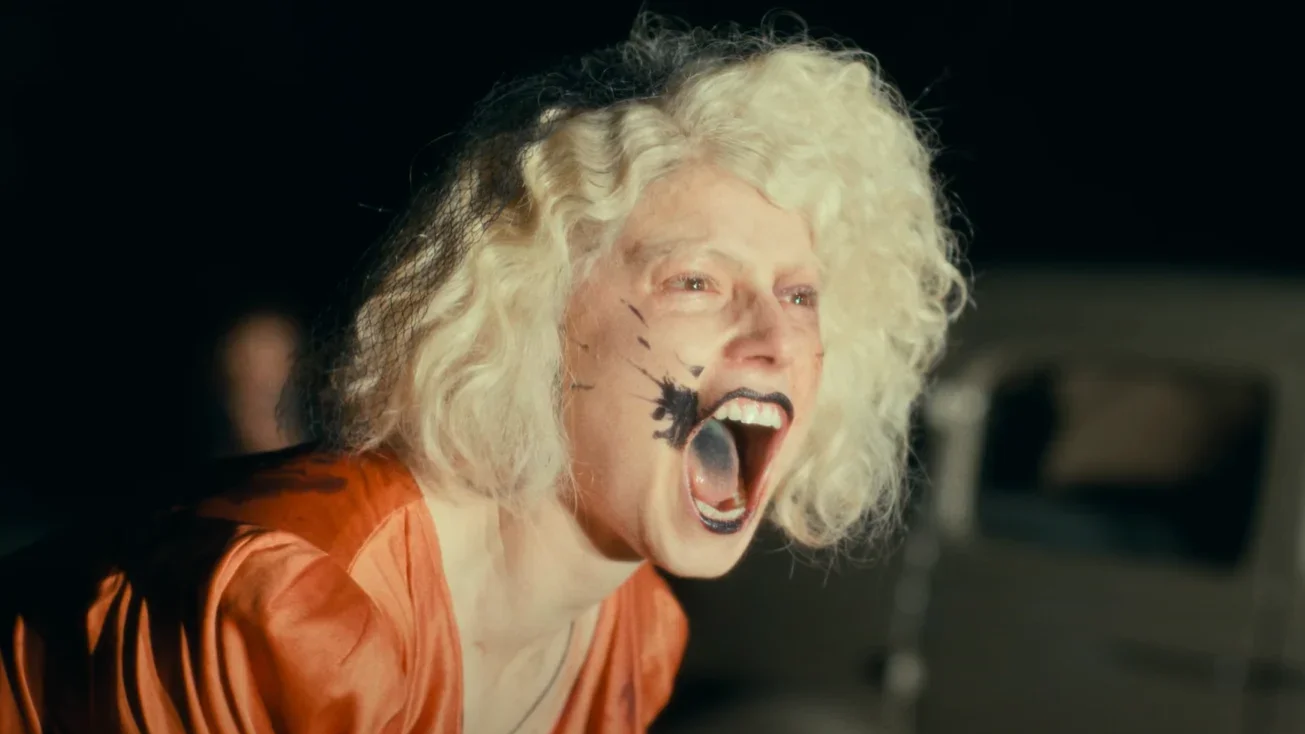
Buckley and Bale have terrific chemistry, but it very much is Buckley’s show. Enlivened by the bold costuming and makeup design—the black stuff on her face is some chemical bile she pukes up periodically that stains her tongue and skin like Japanese Ohaguro teeth blackening—she’s fascinating to watch as she tears through a culture of awful men and brings about a legion of young women that break from society by dressing like her and committing crimes. If Hamnet didn’t sell it for you, Buckley is clearly one of the best actors of her generation, and through the excesses of this movie she’s allowed to go over the top and follow every strange impulse without it being out of place.
There is plenty to nitpick here, and those faults will likely make this a divisive experience, even if it is best to just give yourself over to the rampage the monsters make of conventional society. (I haven’t even talked about the centerpiece dance sequence set after The Bride and Frank disrupt a society party because there’s so much to explore there.) My biggest gripe was that the mob storyline either needed to be ditched or strengthened. Gyllenhaal writes Lupino as a stereotypical evil man at the top of a line of complicit or cowardly men—a substitute for Harvey Weinstein or Jeffrey Epstein—without giving us any reason to sympathize with or validate his behavior. There is a valid, rageful post-#MeToo anger screaming out as to why nothing has still changed in our society, but then the generic crime beats hold the film back, like when we’re forced to spend too much time with the underdeveloped Peter Sarsgaard and Penélope Cruz detective characters chasing after Frank and The Bride.
I could go on with critiques, but they matter only so much when The Bride! is intended to be a mishmash of ideas and intense energy that really sucked me in for the most part. Buckley and Bale are an on-screen couple for the ages, and I’m still captivated by many of the choices they made, and Gyllenhaal makes as director and writer bringing these roles to life (or death? or back from the dead?). Ultimately, this is a movie that, despite its hard R-rating, is going to make some alienated teenager growing up in a small town with only art and the internet as outlets feel seen and a sense of hope.