
Review: ‘A Body to Live In’ is a piercing portrait of a body modification pioneer
2026 / Dir. Angelo Madsen
Rating: 3.5/5
Watch if you like: Sick: The Life and Death of Bob Flanagan, Supermasochist, Videodrome, the spirituality of extreme body modification.
In 1947, 17-year-old Roland Loomis takes advantage of his parents being away for a weekend to intentionally starve himself. For the past three years, he’s been taking bondage self-portraits and developing the photos in an improvised photo lab in the fruit cellar based on his own desires, the competing contrasts of his strict Lutheran upbringing and the South Dakota Sioux reservation his family’s home rests upon, and his escape into the tribal ceremonies found in National Geographic magazines. Chaining himself to the wall, he has visions and achieves a state of spiritual ecstasy.
This is the origin story of performance artist and body modification pioneer Fakir Musafar, captured in the posthumous documentary, A Body to Live In, directed by Angelo Madsen. Largely narrated using a 2018 archival interview Musafar gave on his deathbed, the film both uses and subverts the conventional “talking heads” documentary format. Madsen adds artificial grain, rapidly edits together images into a semi-animated industrial-feeling piece, and cuts in for extreme close-ups on old images. People in Musafar’s life appear, like performance artist Ron Athey, but to demonstrate the wide constellation of influences and relationships Musafar had rather than tell or affirm a specific piece of his life.
Creating an all-encompassing portrait is an impossible task for a 98-minute documentary, particularly when the subject himself is so deeply complex. Not even touching his spiritual philosophies of body modification, we’re talking about someone who partied with Anton LaVey, helped open the first dedicated piercing shop in San Francisco, held court over shamanic pain rituals in the 1970s, lived through the AIDS crisis, founded the “modern primitive” movement, became an underground celebrity thanks to his many TV appearances, and created art that most people to this day would find difficult to understand, much less stomach.
That’s why it makes sense that A Body to Live In becomes more like a loose sketch of the development of body modification and alternative BDSM queer culture from the 1950s onward, with Musafar always a constant figure. Madsen overall manages to balance the experimental approach, broad strokes of Musafar’s life, and diversions into some of the characters involved in these scenes, like the Radical Faeries group that became home to Musafar’s spiritually inflected modification rituals. The limitations of this format mean, though, that A Body to Live In has to quickly move from one thread to the next and balance the need to invite people into this world while providing enough to satisfy those who live in it, which can leave newcomers a bit confused. Ultimately, this is an entry point and not a final destination.
Especially well-handled by Madsen is the treatment and contextualization of the accusations of cultural appropriation that began after Musafar was featured in the documentary Dances Sacred and Profane performing a sun dance ceremony outside the indigenous tribal traditions in which it originated. Madsen does give space to indigenous voices challenging Musafar in archival footage from Musafar’s talk-show performances. At the same time, the documentary doesn’t condemn him and leaves the viewer to wrestle with the contradictions inherent in a modern reckoning with a queer person trying to explore his sexuality, gender, and spirituality in the only physically and psychologically safe way to do for someone born in 1930s South Dakota.
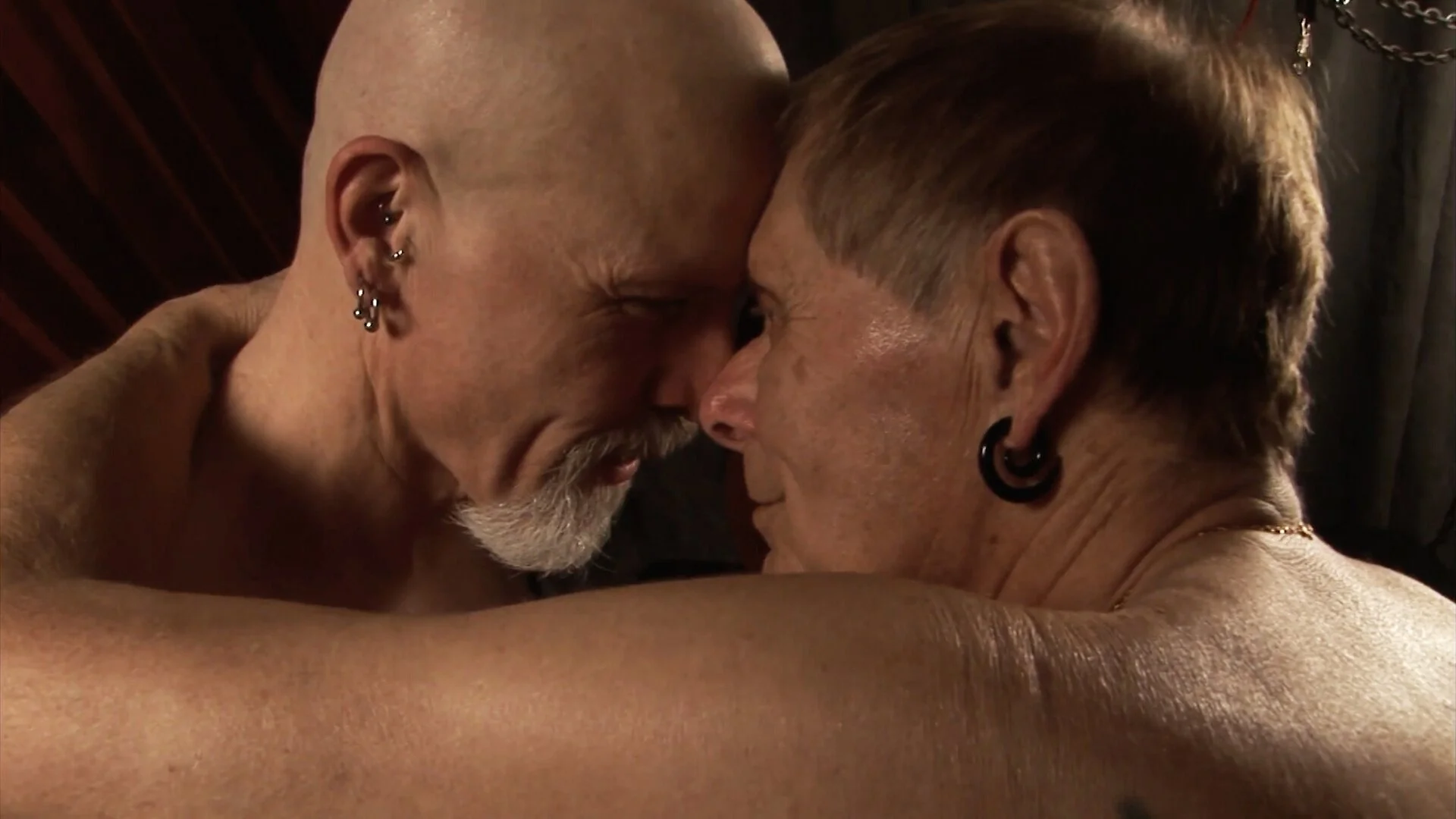
Even without the tribal and spiritual elements, the act of body modification itself is still quite taboo. More people than ever are tattooed and pierced, but it’s still out of the norm to suspend yourself with hooks through your chest. Late in the film, there’s space for a longer scene where an older Musafar and his wife prepare his lover for a suspension. There’s such care, love, and intimacy to this sequence that goes through the suspension, emotional release, and aftercare. I found it so beautiful and touching and had forgotten my squeamishness over the act itself, which no longer seemed so shocking.