
Review: ‘Dolly’ wants to play
2026 / Dir. Rod Blackhurst
Rating: 3.5/5
Watch if you like: The Texas Chain Saw Massacre, Barbarian (specifically the parts where the mother creature feeds Justin Long in the pit), and going into the woods and seeing dozens of creepy dolls tied to trees and deciding it’s a smart idea to continue with your hike instead of immediately turning around.
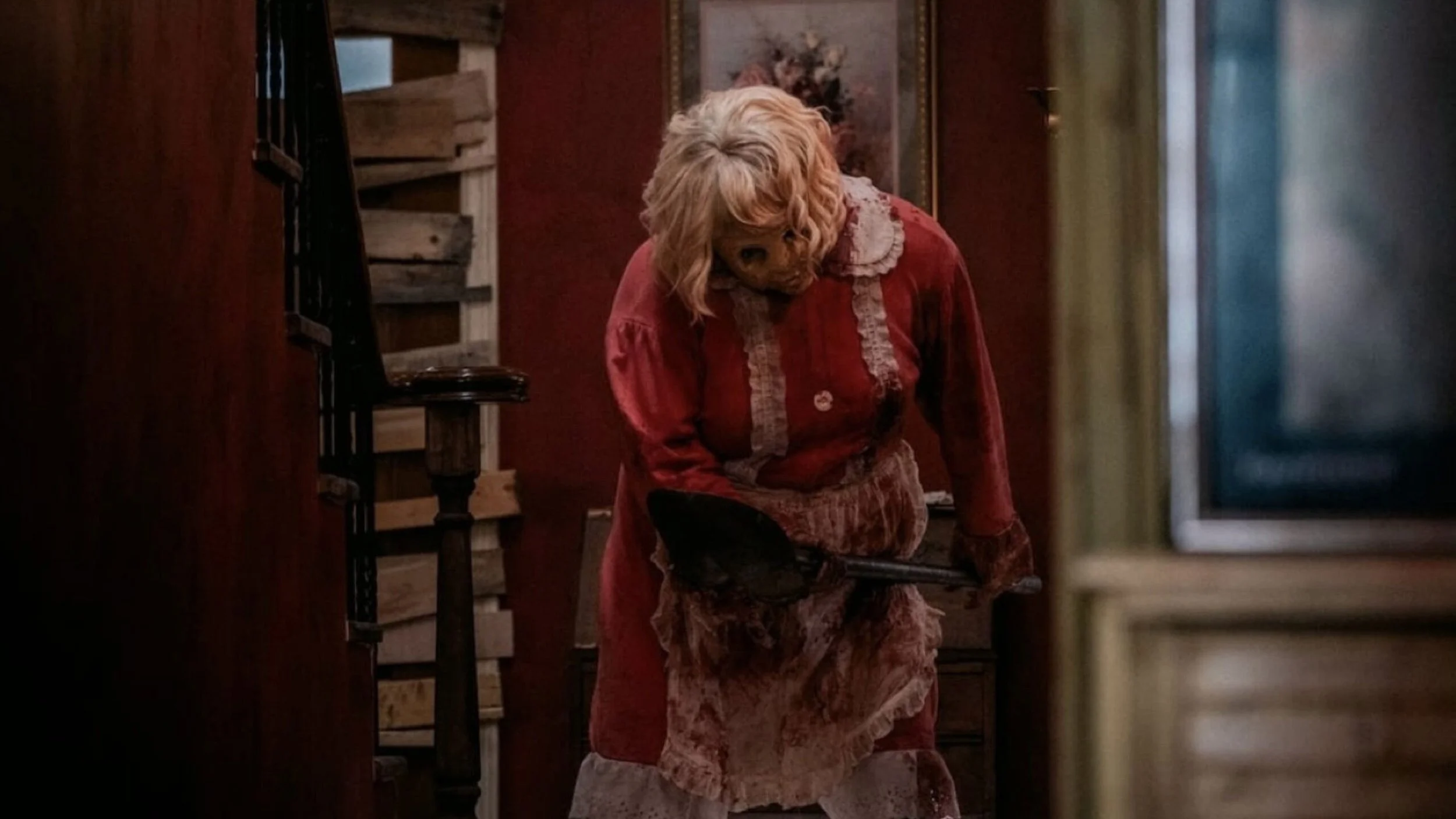
A soon-to-be-engaged couple out for a stroll in the woods. A girl grieving her mother, who knows she has to step up and become the woman of the house. These two worlds are about to collide in Dolly. And by collide, I mean smacked in the face with a shovel—because Dolly is not a cute rom-com but a ‘70s-inspired grindhouse slasher with a killer that wears a porcelain doll mask.
Dolly is a meat-and-potatoes slasher film that seems designed to check most of the genre’s conventions while adding just enough to keep things fresh, as well as what’s most important in the genre: an iconic masked killer. Played by wrestler Max the Impaler, the character of Dolly feels like she could go the distance as a slasher icon. While clearly a riff on Leatherface and The Texas Chain Saw Massacre as a whole, Max the Impaler expertly balances the imposing physicality needed to be an intimidating villain with the juxtaposition of the fragile delicacy the porcelain doll signifies. Dolly has carefully little hand movements, she’s sneaky and playful like a child, and gets frustrated and beats herself up when she can’t get our final girl, Macy (Fabianne Therese), to behave. Of course, she’s also brutal, causing bloody mayhem that’s delivered mostly through goopy practical effects with a couple of moments of rough CGI.
Cinematographer Justin Derry and director Rod Blackhurst are able to capitalize on Max the Impaler’s performance by wringing more emotion and feeling out of the static mask than any other masked slasher. Using lighting and angles, they play off Dolly’s body language so the mask can look giddy, angry, hurt, or scared. Those cinematic touches extend to the rest of the film. Shot in grainy 16mm, Dolly nails the feel of a classic low-budget horror film (creepy doll altars, an uncomfortable old Victorian mansion, etc.) while going beyond it with unique touches like a psychedelic sequence of Macy being sucked into a red void or capturing a chase like it was out of an early Darren Aronofsky film.
Besides the attention to detail and cinematic touches, the other slight twist to the formula is the inclusion of a final girl who’s aggressive and unwilling to sit back and take it. We’re introduced to Macy on her way to a woodsy getaway that she knows will end in a proposal, but she’s not totally sure about whether she wants to marry Chase (Seann William Scott) or not. She’s feisty and prone to pranks, and not the typical mousey virgin character these types of movies usually center on.
Once she’s been captured by Dolly, who wants Macy to be her baby doll, she’s cautioned by the faint voice of a man (Ethan Suplee) locked up in the room next to her to play along. Macy does anything but that. Every chance she gets, she tries to fight back and get out. Yes, there are plenty of horror tropes—why doesn’t she just hit Dolly more than once until she’s actually dead?—but she’s such a fun character, and the movie moves at a breakneck speed from one setpiece to the next that the intensity doesn’t let up. Fabianne Therese takes what’s a thin role on paper and really makes an impression.
Dolly may not reinvent the slasher horror movie wheel, but its grindhouse feel, captivating villain, and tough-as-nails protagonist offer enough twists on the formula make for a very fun ride perfect for a midnight movie screening or with a group of friends at home. I’m certainly hoping this is just the first of many zany adventures for Dolly and she can return bigger and better in a sequel.