
Interview: ‘Dolly’ director Rod Blackhurst on indie horror, creepy dolls, and Max the Impaler
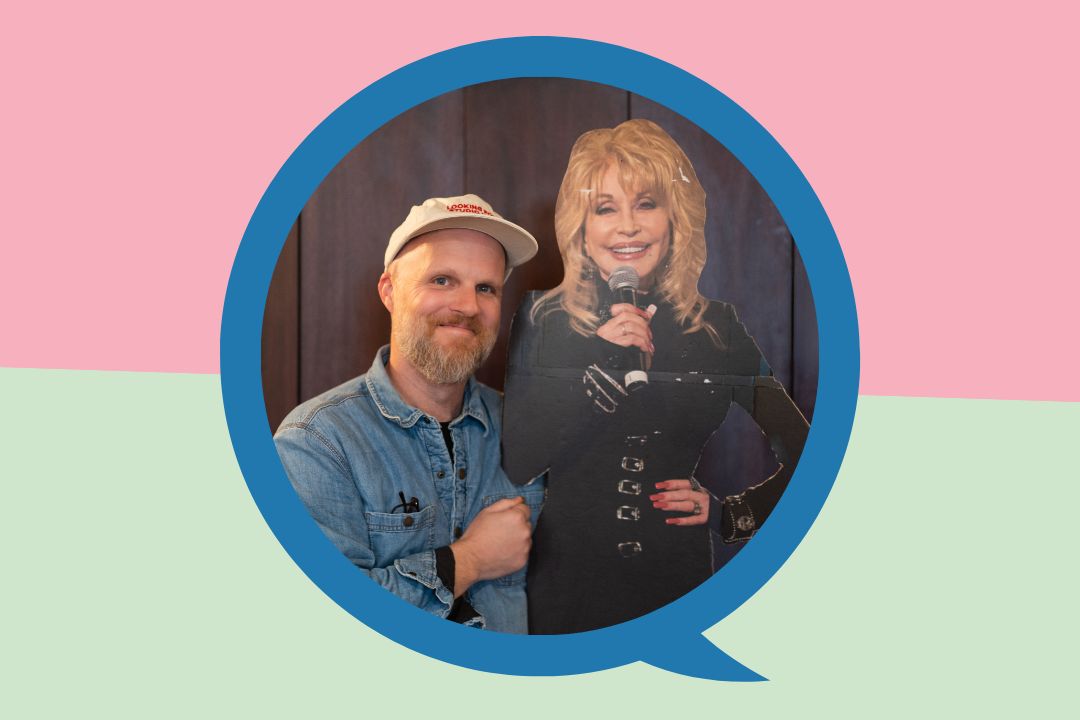
In Maker’s Dozen, we ask folks in and around the film industry 12 questions and have them ask one of us.
Rod Blackhurst is a screenwriter and director best known for Blood for Dust, Amanda Knox, and Here Alone. His new film Dolly is out in theaters on March 6! (Read our review.)
Our chief critic James Podrasky talked with Rod ahead of the film’s Chicago premiere about the origins of Dolly, developing the character with Max the Impaler, battling poison ivy, working with Seann William Scott, and more!
This interview has been edited for content and clarity.
1. What’s the Rod Blackhurst origin story?
I grew up in the woods of the Adirondack Mountains. I grew up without a TV. I love movies. They were forbidden fruit. I watched the movies that you shouldn’t be watching, but it was the ’80s and ’90s. I didn’t know anybody, didn’t have any money, didn’t come from money, so you just start cold-calling people until someone tells you to shut up by saying, “Here, we’ll let you make something that you tell us you can make.” And now, here we are.
2. How did the idea for Dolly first come to you?
My writing partner on this is a guy named Brandon Weavil. He reached out to us via my producing partner Noah Lang’s website. He was just a screenwriter trying to have people read his work, and he said we were the only people out of hundreds and hundreds of queries who got back to him. I thought Brandon was truly the best pure horror writer I’ve ever read, and I’d been noodling on this idea of making a film in a manageable way—set during the day, few characters, few number of locations—as a response to all the professional bullshit I was encountering where I couldn’t get a movie made. So I texted this idea to Brandon one day as I was getting on a plane and it became this massive text thread.
Dolly started as a response to many different things and ultimately became what it is because of so many other incredible people. Like anything it has strange origins. It wasn’t “I need to make a movie with a doll” or “I need to make a movie in the woods.” The woods are cheap to film in, and there are woods everywhere. And for the dolls, in this film they are like little children and family. They’re being used as audience members or played with as characters in your life. I have two little girls, and they treat their dolls like people. They have identities and characters and they talk to each other. They’re also scary because they are emotionless and you can’t get a read on them. They look familiar enough because they’re styled after us, but clearly they’re not human, so then your imagination goes to work.
3. One thing that struck me watching was how well compared to every other kind of horror slasher you established emotions with that mask through camera angles and lighting. How did you accomplish that?
Thank you. Justin Derry, our cinematographer, is incredible. He operated the camera, which is increasingly rare. Bigger movies have camera operators, and cinematographers are largely responsible for lighting and running the camera and grip and electric departments. But there’s a handheld language here that’s human and reactionary. You can feel the way the camera’s kind of looking to see something. There’s a real dance that’s happening on set between two storytellers. And Max has had to tell so many stories without words, so they know the nuance of movement and the way physicality can say something. So much of what you’re seeing is because Max the Impaler is remarkable as a performer.
4. My understanding from an interview I read was that a producer just happened to see a poster with Max the Impaler on it and that’s how you connected. When you and your co-writer were coming up with it, did you have a vision for what Dolly looked like or was it shaped when you found Max?
We wrote Dolly in 2021. Our mask designer is a man in the U.K. named Dan Martin who runs a big fabrications film effects company called 13 Finger FX. I went back in and looked at all of our conversations, because we were curious about this. It’s one thing to write “porcelain mask” and it’s another thing to have it be practically brought to life. The inspiration for Dolly comes from having watched Tourist Trap and Child’s Play. There was also a Shirley Temple doll I’d seen for sale years ago on Etsy that had that patina and effects on the face. There’s a Dario Argento film called Deep Red where there’s a cracked doll face in it. Dan had also worked on an Amblin film called The Turning and had created some doll things for that. So we have what we wrote, but it becomes better than that as Max wears the mask and becomes something alive, even though you can’t really see that it’s alive. And we used hundreds of dolls. It turns out if you want to buy yourself a shitload of creepy dolls, Facebook Marketplace is your kink fulfillment center.
5. Dolly’s body language and physicality, like through the delicate hand movements, are really expressive and show us how Dolly’s feeling. How did that come about?
I come from the school of thought that as a director, I can’t tell an actor to do what they would do better than me, right? It would be hubris to suggest otherwise. They’re making choices and doing things that I can’t do. Those are the contributions they’re making. What I can have is the intentionality, the narrative, the backstory, and the things that are informing that. Max and I talked so much about what’s not on screen, which we had mapped out when we were first writing this. Where does Dolly come from? What are the family dynamics? Max did all this research, including finding this story in California from years ago of this little girl named Baby Genie, who was raised in a living hell. There’s footage that exists as she was rescued, which is haunting and terrifying. It’s a real-life horror story. Max did all this research into physical behavior and how stunted growth and development and lived pain and violence would affect somebody, and then together we worked to add ideas. Like Dolly is a simple character because of what they’ve endured and they have three sorts of levels of energy, three walks, three speeds, three physical posturings, and they use them at different times relative to the stimuli they’re receiving. And this is Max just going, “I’m gonna make sure this character is fully thought out and fully realized.” They are owed all the credit for making Dolly everything that they are on screen.
6. You touch on some horror influences, with elements of slashers and ’70s grindhouse with the grainy 16 mm look. In what ways did you want to stay true to certain horror genre elements and where did you want to shift and leave your mark on it?
We’re tipping our hat to the films and inspirations that have made us. Every collaborator comes to this with a love of John Carpenter scores, but also my composer Nick Bohun also loves Jonny Greenwood. I love The Texas Chain Saw Massacre—a lot of us do—but I also love David Lynch films that get into the surreality of things. Or the New French Extremity works, which are non-stop and brutally relentless and tell stories slightly out of the realm of what’s possible. These are things that are part of me, and now we’ll do it with our own touch. I hope there’s something there for everyone, and I hope that the film getting called a slasher brings people to it who like those things and then they find something else they like. We engage with things that are familiar and safe because it’s risky otherwise. But it can be so much more than what you thought it might be at first glance, and I hope that Dolly has that for audiences.
7. Is there a particular element or scene in Dolly you’re proud of or something you’d want to draw viewers’ attention to that may not pop out immediately?
I’ve said publicly that this movie is for my family. That’s because I put my daughter in it, I started a band with a group of my friends that wrote all the country music for it, and we put ourselves at the very end of the movie because we’re trying to have fun and we’re trying to make a living. I got to spend a day with my daughter on set and watch her thrive and have confidence. She doesn’t know who Seann William Scott is and doesn’t know the impact he’s had in my life as just a film fan. She’s just like, “I have a movie dad for the day and he took care of me.” I’ve known Sean for a bunch of years now and he treated Eve like she was his kid to make her feel safe and welcomed on set. Because he’s my friend, he’s there to help the thing succeed and work, and he didn’t have to do that. That’s just what friends do and that’s what family does. People when they watch the movie will feel how real and authentic that little kid is, and how she responds to her screen father and her screen stepmother—well, that just comes from it being a family affair.
8. People of a certain age know Seann William Scott from American Pie or Dude, Where’s My Car? In Dolly he has this transformation that he carries with the rest of the film that’s very atypical for a recognizable actor to do. How did you connect with him?
We became friends because I’d asked for a meeting with him and he agreed to meet with me. This was in 2019. He’d seen the first two movies I’d made and thought, “Well, this guy’s not a joker, he knows what he’s doing.” I asked to meet with him because creative individuals are not just one thing—he’s done a lot of comedy but I’ve always liked him as an actor and the choices he’s making. So what else is he interested in? My initial email to his agents was like, “Hey, I’m a filmmaker. I made these things and I would love to sit down with Seann and find out his Venn diagram of interests.” And we just hit it off. When you make an independent low-budget horror film, you call your friends, you call people that are in the proverbial family. Everybody on this cast and crew is somebody I know or a friend of a friend, and when you’re gonna be in the hot Tennessee summer with the mosquitoes, the poison ivy, and the ticks, you call people who will have your back and will show up because they believe in you. You don’t want any bad apples there.
“If you want to buy yourself a s**tload of creepy dolls, Facebook Marketplace is your kink fulfillment center.”
9. What were the biggest challenges during filming?
Copperhead snakes, ticks, mosquitoes. My back was covered in poison ivy. There was a lot of it. We did poison ivy mitigation, but man, my whole back was covered in poison ivy for the whole shoot.
10. People who stay through the credits will see a shoutout to the members of Creed. How did that come about?
They aren’t friends, but I am a product of their influence. I’m 45. There are no rules when making a movie. I could have said thank you to Brad Pitt, but I thanked them instead.
11. I’ve read there’s talk of Dolly returning in a prequel. Is there anything you weren’t able to do this time that you would still like to do?
When we wrote Dolly, we wrote what could be achieved pragmatically in time and money. What we couldn’t do is tell all that backstory. We couldn’t show who this family was, where Dolly comes from. And that is so important to us. For those who have complained that that’s not in this film, well, you’re welcome to go try to make a film with no money and no time and see how much you can put into it and do well. But also, the thoughtfulness is there. The clues are there. You want to do so much more but you can only do so much. But that’s indie filmmaking 101. We would love some institutional support and a lot of money to make these next films, because we are dreamers and we’ve got it all mapped out and ready to go. We’ve got the car built, just someone give us the gasoline to run the engine.
12. Long-running slasher series tend to get a little ridiculous. Let’s say you’re planning Dolly 9. Is she going to space? Is she going to infiltrate a Manhattan “daddy’s little girl” fetish community?
What I will say is, I’m a lover of horror movies and those that have come before me. I think a lot of people are aware of some of the missteps they make. I don’t know how things get off the rails, but we’re working really hard to make sure Dolly is ours forever and ever, and to make something that genre fans will love. At the same time, there are no rules and people do love when shit gets absurd. If we do it in a knowingly self-aware way and at the appropriate juncture, why not? Yes, we will make them be very good and we will learn from what people want and love out of Dolly, and we’ll carry that forward to Dolly 2 and 3 and so on. But also we’ll have fun with it, and then people will go, “Oh shit, you just subverted our expectations entirely.” But if we’re at Dolly 9, I’ll be tickled that we got to make it that far.
+1. What’s your question for us?
What do you love about horror movies?
James: Growing up, I weirdly identified with the creature. Maybe I always felt like an outsider or something. I wasn’t like the popular kids. I also just loved how they looked. In my elementary school library, they had a book on horror movie makeup and it had all the stuff from Carpenter’s The Thing, which I shouldn’t have been seeing when I was eight, but I’d check it out over and over again. I was obsessed with that.
Rod: I feel that. I’ve felt like an outsider my whole life, and I think horror movies are like “by the people, for the people.” It’s very punk rock. You go back to George Lucas making Star Wars or Sam Raimi making Evil Dead or Toby Hooper making Texas Chain Saw or John Carpenter making Halloween… they’re outsiders. They’re not the cool kids, and I’ve felt that way my whole life.