
Review: The magnificent and strange ‘Mother Mary’ is haunted by an identity crisis
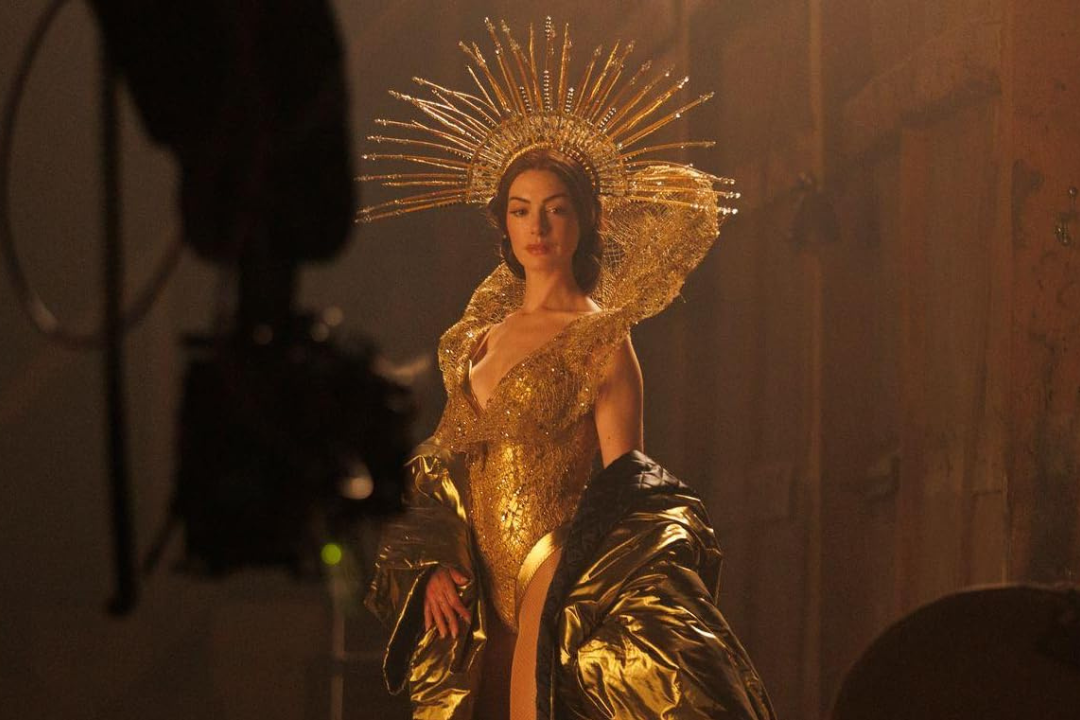
2026 / Dir. David Lowery
Rating: 4/5
Watch if you like: Black Swan, or Charli XCX’s The Moment if it were a remake of Persona with FKA Twigs playing Lorde’s part.
Director David Lowery (A Ghost Story, The Green Knight) pits Anne Hathaway and Michaela Coel against each other as two former collaborators coming together again on the eve of ethereal popstar Mother Mary’s big comeback performance. That is, if they can exorcise the (perhaps literal) ghost of their past estrangement. Often magnificent and deeply strange, Mother Mary will probably be dismissed as pretentious floof for those who don’t get it, but those who do may find something transcendent.
We first see Mother Mary (Hathaway) as a regal, commanding presence on stage, evoking pop stars like Lady Gaga, Beyoncé, and FKA Twigs, yet with a soft grandeur that gives her a distinct identity. That feeling is echoed in the alt-pop songs sung by Hathaway (credited to Jack Antonoff, Charli XCX, and FKA Twigs), who does a convincing job as a pop singer with a wispy religious flair, and some truly stunning concert sequences captured by cinematographers Andrew Droz Palermo and Rina Yang. Having just seen the phoned-in approach to recapturing a great artist’s early career highlights in the Michael Jackson biopic Michael, it was even more striking how much work went into convincing the audience that the fictitious Mother Mary was pop royalty.
The Mother Mary that shows up haunted and disheveled at the doorstep of fashion designer Sam Anselm’s (Michaela Coel) palatial British mansion is a world away from who we just met. While the two had created the look and vibe of Mother Mary together, they haven’t spoken in years. Sam seems to relish the chance to berate her former friend, who has come crawling back on hands and knees to help her recapture Mother Mary’s essence. This first half is owned by Coel’s icy, sharp performance, consistently finding new ways to dig at her former friend and cut deeper and deeper.
Much of Mother Mary takes place in Sam’s spooky barn workshop, a sprawling open space that Lowery uses in increasingly cool ways. When either character begins to recall past events, the barn will literally transform to show us the memory. In one notable transition, Sam opens the barn doors to reveal a past Mother Mary performance, with the concert’s stage setup mirroring the barn’s architecture.
Returning to some of the territory of A Ghost Story, Mother Mary plays with more horror elements as we move further along—even though it never becomes a full-on A24 “trauma house” experience—such as including a seance led by a scene-stealing FKA Twigs that gave me literal chills. Instead, the “haunting” here, if there even is one, is used to explore the intersection of identity, in particular, how two people could create a singular identity that defines them for life, whether they’re together or not. That’s not to say anything that transpires here is clear-cut, with Lowery pushing the limits further of his personal brand of experimental genre-ish dramas.
What sells even the film’s more out-there elements is the performances by the two lead actresses. Hathaway’s role doesn’t get to make a meal out of Lowery’s script like Coel’s barbed monologues, but it’s her most physical to date, owning both the stage as Mother Mary and an extended raw dance sequence in the barn that will go down as one of the highlights of her career (at least in my book). Coel, meanwhile, commands the screen now, having delivered two outstanding performances in 2026 that see her going toe-to-toe with two major stars, between Hathaway and Ian McKellan in The Christophers, a film with quite a lot of similarities to Mother Mary, while executed in tremendously different ways.
Ultimately, what I found more fascinating than the performances or all the cinematic flourishes on display was how Mother Mary caused me to reflect and purge from myself my own ghosts of the relationships in my life that, like the two characters in the film, have long disappeared from my life, yet still cast a ghostly shadow. Is it the same for them? Do I, too, haunt their memory?