
Review: ‘Michael’ is, uh, bad
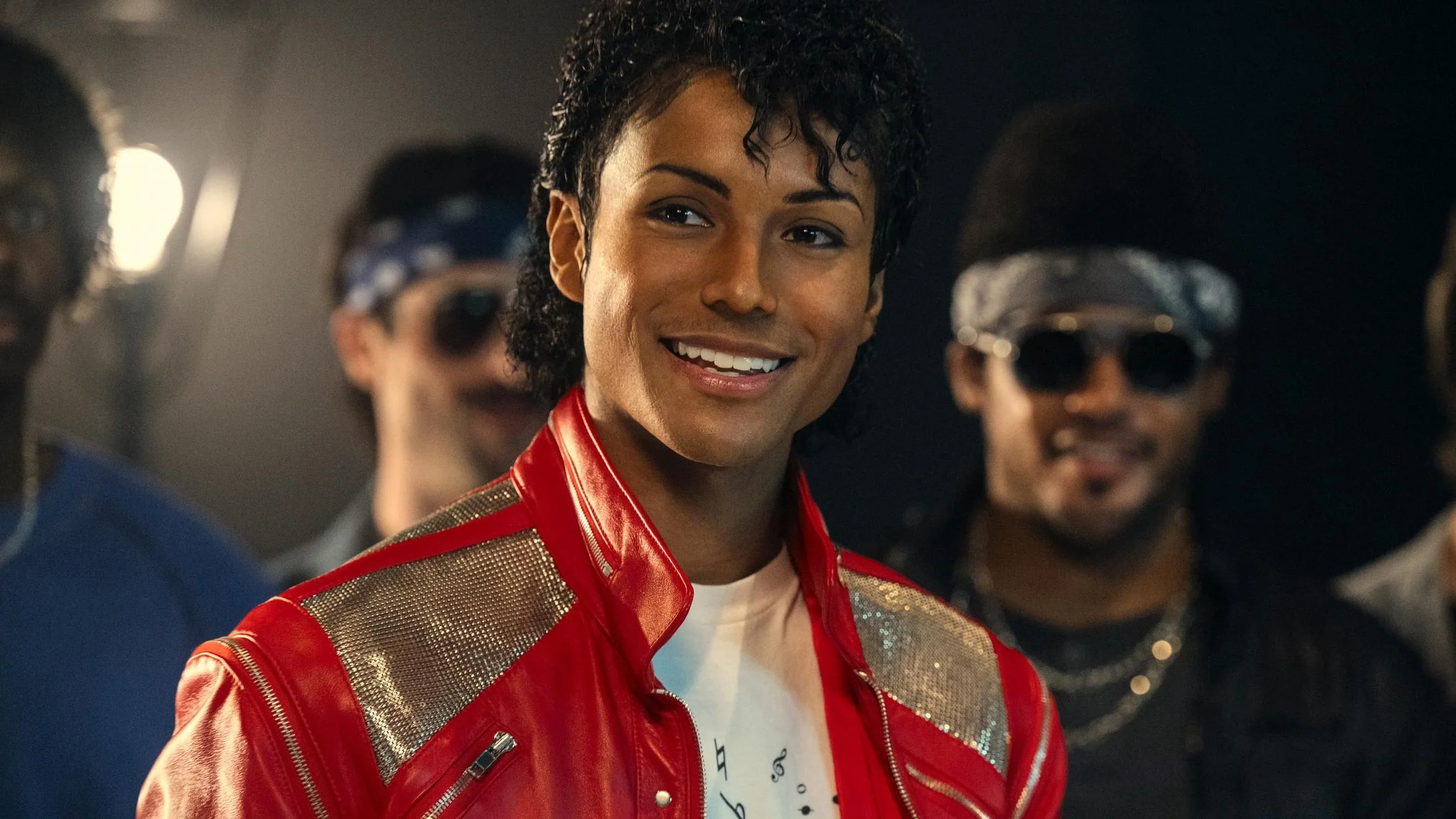
2026 / Dir. Antoine Fuqua
Rating: 2/5
Watch if you like: listening to an artist’s top three singles, then reading an AI summary of a Wikipedia article about them and calling it a day.
Every artist has some skeletons in their closet. For Michael Jackson, there’s a whole Neverland Ranch full of them. That makes the prospect of seeing Michael, produced by several members of the Jackson family, quite a moral minefield. I had some hope, though, that the film—skipping through time and wrapping mostly in 1984 when he had become the biggest artist in the world—might at least give someone like me, who didn’t get to experience what it was like to live in a world where Michael Jackson was the biggest artist in the world, that opportunity to see what it was like. This paint-by-numbers music biopic, however, has barely anything to offer anyone, thanks to its total lack of interest in its subject.
Michael covers the same time period depicted in the popular television miniseries The Jacksons: An American Dream, which used to play on repeat on VH1 through the 2000s, taking him from childhood to the point where he gained the courage to leave his family behind for a solo career. This movie feels like watching the miniseries on fast-forward, pausing at random points to get the gist.
There’s absolutely no depth to anything here or any character. The brothers have no discernible personality traits or lines; his mother (Nia Long) is just there to have ice cream and watch TV with him, and Colman Domingo hopefully got a nice paycheck to go through the motions as an overly made-up Joe Jackson, who is nothing more than a gaudy boogyman rather than one of the scariest stage dads of all time. Janet Jackson was bizarrely written out of this Jackson cinematic universe. The only real highlight is Jackson’s actual nephew, Jaafar Jackson, whose resemblance is uncanny and nails the part. It’s almost eerie how close his voice and mannerisms are to his uncle’s. Too bad he wasn’t given anything to do.
In an effort to escape controversy, the character of Michael has been sapped of life, leaving what’s left deeply sad and strange. The movie Michael has no friends other than animals—a scene of him playing Twister with a CGI Bubbles the chimp is deeply unsettling—and everything he learns of the world is from television. The latter leads to a baffling sequence where, after learning about gang violence, he invites members of the Bloods and the Crips to his dance studio to watch him learn the choreography for “Beat It.” Elsewhere, we see him make three separate trips to visit kids in the hospital, be surrounded by children in a toy store, and, even as a grown man, always look at his illustrated Peter Pan book. Lord knows why anyone would think it’d be a good idea to have him shown with any children at all, much less throughout the movie.
Even if you were to ignore that his own family seems to completely misunderstand how deeply depressing his early life was, they also seem to care very little about depicting him as an extraordinary artist. When he’s writing, Jackson is seen waiting around for inspiration, watching more TV, or saying vague platitudes like “I have to shine my light.” The frequent musical numbers faithfully recreate iconic moments and are mostly entertaining, but without any extra frills. Baz Luhrmann’s Elvis was also very loose in its interpretation of a historical figure, but I can’t help imagine what Luhrmann would do with the first time Jackson moonwalked, compared to Fuqua’s straightforward depiction. I don’t even feel that strongly about his music and find it upsetting how half-assed it all feels for a man who made the best-selling album of all time worldwide.
Here’s my 10-cent idea for how to do a Michael Jackson movie that no one asked for if I were the Jackson estate and didn’t want to wade into anything from the ‘90s and beyond: make it entirely about creating Thriller and stage it like a heist movie as Jackson and his collaborators “conspire” to upend the music industry. You could still get the tensions about his father in, his growing self-esteem issues about his nose and vitiligo, while developing more of who he was at that moment and all the fascinating people that help made that album. Instead, we get Miles Teller playing Jackson’s lawyer with one of the worst hairpieces of all time and a final threat of a sequel with the ominous closing words, “His Story Continues.”