
Interview: Jorma Taccone on Directing ‘Over Your Dead Body’ and Balancing Horror and Comedy
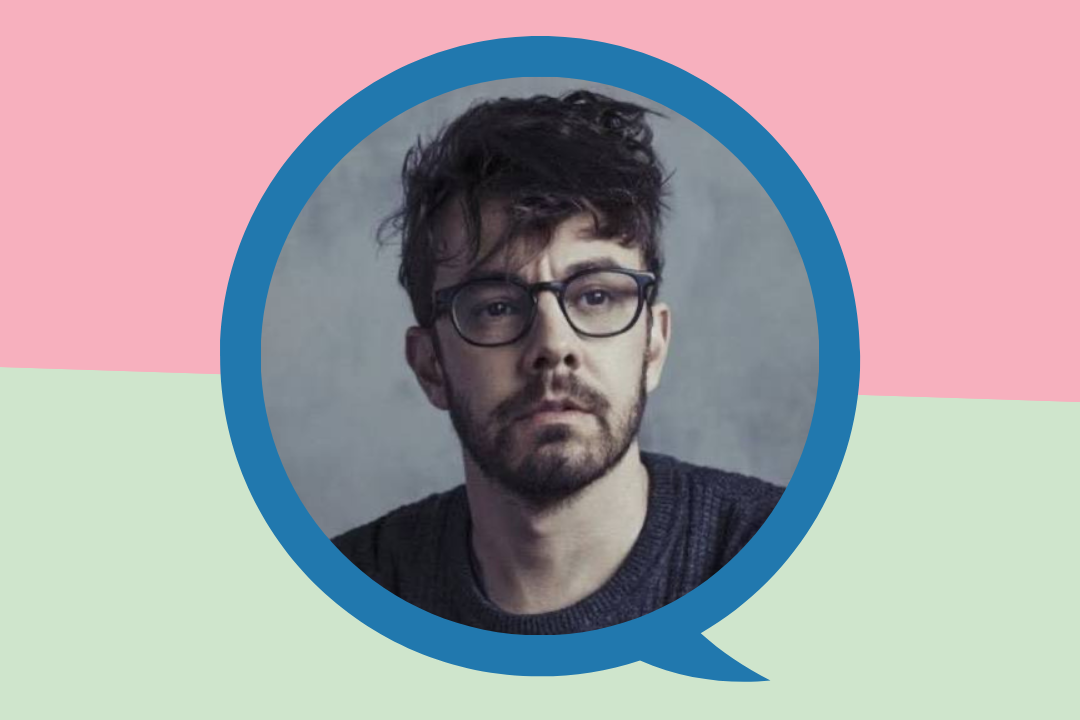
In Maker’s Dozen, we ask folks in and around the film industry 12 questions and have them ask one of us.
Jorma Taccone is a writer, director, actor, and musician best known for being part of the comedy music group The Lonely Island. In addition to his nine seasons as a writer on Saturday Night Live, he also co-wrote and directed MacGruber and Popstar: Never Stop Never Stopping. His directorial debut Over Your Dead Body starring Jason Segel, Samara Weaving, and Timothy Olyphant comes to theaters April 24!
Ahead of the film’s Chicago premiere at Beyond Fest, our chief critic James Podrasky spoke with Jorma about what drew him to this project, balancing horror and comedy, filming in Finland, and more!
This interview has been edited for content and clarity.
1. What’s the Jorma Taccone origin story?
I was born in Berkeley, California. I became friends with Andy and Akiva, and we formed The Lonely Island. We worked at SNL for seven years. We made four comedy albums and two movies. My first movie was called MacGruber. I make stupid things that I pour way too much energy into. And my new movie is a departure from that.
2. It’s been 10 years since Popstar: Never Stop Never Stopping. What was it about this project that drew you back into directing?
I did an episode of Knuckles, which is a spin-off of the Sonic the Hedgehog series, which I shot in London. I put so much energy into the pre-production, production, and post-production of it that I realized my appetite for wanting to do longer-form stuff was back. I’ve been doing a lot of TV in those 10 years, but just random bullshit commercials for money. What I love about filmmaking—and I’ll put that in quotes because every time I talk about myself as a filmmaker, it feels really up my own butt—but what I love about it is there’s so much problem-solving in it. And in longer form, it’s such a different way of thinking about things, because something that happens in the first 10 minutes then affects how you feel about something that happens in the second act, so it just gets your brain working on so many different levels that shorter form stuff doesn’t allow you to do. I love putting an excessive amount of energy into the whole process.
So I was actively looking for a feature. Then Tommy Wirkola was on the set of Violent Night with my producer, and Tommy kept quoting Hot Rod, Popstar, and MacGruber. And he was like, “Well, why don’t you just call that guy?” There’s clearly a Venn diagram here as he’s making action comedy stuff, and I’m making action comedy stuff. So he called me up, and we had a great conversation, and then a week later, he called me and said, “Tommy’s got this Norwegian movie he made only a couple of years ago. Would you ever want to make a remake?” And I was like, “Absolutely not.” I have no interest in that. But he said to just watch the original, so I did, and I loved it. Then I read the script that Nick and Brian wrote, and I couldn’t get it out of my head. There are so many different tones. It’s like three movies in one—a suspense thriller, a home invasion movie, and an action movie. For me, as a “filmmaker”, to be able to flex different muscles, have real scenes of drama, be able to do comedy and drama and action all in one… it was too good to pass up.
3. Over Your Dead Body is based on the Norwegian movie The Trip. How did you make this movie your own?
With any kind of remake, you’re also looking at if it’s something I’m going to put my stamp on and have it feel like it was worth doing. The original was so emotionally dark, and I really liked it. It’s exactly what Tommy wanted to make. I wanted to keep the teeth of the original—ours is probably even more violent and gorier than the original—so I wanted to make sure that it wasn’t a softer American remake, but I also wanted the characters to be more sympathetic. That was a big thing for me. You want to make the movie your own, and that’s a tonal shift overall. And then there’s a different speed—it just ramps up and goes. But you’re also not wanting to change things for the sake of changing them for no reason. There are so many awesome scenes in the original, and this is very true to the original. So I didn’t want to just change things for my own ego.
4. You balance nasty, mean-spirited horror and Looney Tunes-esque comedy on a razor’s edge. What was the process for getting the right balance?
The original’s really intense, and Tommy likes to sit in that. He does not want you to shy away from how painful it is. You really are left with the anger between these two characters. For me, I just wanted it to be that you wanted these people to be together. As in any relationship, if you lose communication and you start retreating into yourself, that’s when all the problems really start, and it’s so relatable for that. So I really wanted the catharsis at the end of the movie where you do want to see these people—who are rather shitty people—to actually see them be shitty together. I love the structure of the original. It goes in all these places you don’t expect it to go. Because people are so well-versed in how they think a movie should go, it’s really fun to see something that moves in a different way than you expect it to. I just love being able to push the comedy while being grounded enough to have it be that the comedy is coming out of the situation.
5. How do you get Jason Segel and Samara Weaving to absolutely hate each other?
That’s hard because both of them are very charming people. You’d have to ask them if they actually ever got to a point of disliking each other. They were so fun to be around. What was nice about shooting in Finland was that it was much more of a destination wedding. Nobody can escape. We had Thanksgiving together. But it also allowed me a lot more rehearsal time with them, a lot more than you get in a lot of movies. Weirdly, it’s like an overlooked thing. That’s where you get to find details, add lines. There’s a section where they were giving each other their own grievances, and they both wrote those monologues. You only get to do that by having the time with your actors to sit and figure out what it is. You can have anything on paper, but your actors are creating these characters, and if you don’t have that kind of back and forth, there are so many things you’re gonna miss.
6. What’s something more people need to know about Finland?
Saunas are becoming a very popular thing over here, and that’s extremely Finnish. There are three million saunas in Finland, and there are like five million people, so it’s very popular. There’s one in almost every home. My name is Finnish, though I’m not Finnish—I was named after the guitarist from Jefferson Airplane. But if you added an N to my last name, which is Italian, it would be Tacconen in Finland, so every single person I met there assumed I was Finnish. And I’m not at all Finnish. I mean, you can get my vibe from just hanging out right now. I’m like the polar opposite of a Finnish person. It’s a very stoic culture, which I loved. It was a really nice blend of loud, boisterous Americans and the very buttoned-up Finns.
7. What moment in the film are you most proud of?
There are two things that are Easter eggs. One is that my phone number is in the movie, so people can call me. And two, there’s a tiny fart that happens that’s inaudible. It was literally for me and my editor only, and we left it in. It’s in a moment of violence, and I will let people watch it multiple times so that they can find it.
8. What would be your zany plan to kill someone and not get caught?
I don’t know what mine would be. But my wife could easily poison any drink that’s lying around because I’ll drink anything that’s just sitting out. She’s like, “It’d be so easy to kill you.”
“I wanted to make sure this wasn’t a softer American remake, but I also wanted the characters to be more sympathetic.”
9. What’s something you learned during the early Lonely Island or SNL Digital Shorts days that was useful in making this film?
All of that goes into filmmaking. We edited every one of those shorts ourselves, so I definitely put my 10,000 hours of editing in, and it’s invaluable to be able to tell jokes and know the rhythm of a joke and how to tell it. It was a surprise for me to see how similar that kind of editing goes into violence and action stuff. So I loved that part of it, but the thing that was new for me on this was being able to sit and really do dramatic and more emotional scenes. That was the really fun part. I think I have a really good sense of what I think is funny, and how to tell a joke with editing. But that’s when you get into like the frame fucking—like, it can be the difference of a single frame, honestly. But it was really nice not to do that with dramatic scenes.
10. We’re coming up on the second anniversary of the debut of The Lonely Island and Seth Meyers Podcast. What’s your most unexpected takeaway from that experience thus far?
It’s a joy to be forced to actually hang out with your friends. That that is a job is unbelievable. I love all those guys, and to be able to fuck around with them every week is amazing. Like, how often do you even get to talk to your old friends? I think the joy of the pod is that it sort of reconnects you to maybe wanting to call your old friends.
11. Do you want to keep going with horror comedy or tackle another genre?
I think I always want to do something different that feels like a challenge. I’m very lucky to be able to make movies at all, as it’s so hard to make anything. Every time I’m on a project, it’s like paid grad school. In the original draft from Nick and Brian, there’s a thing where a crow flew through a window at one point. And I like the fact that I could say to those guys, “I’ve worked with crows before on Miracle Workers—they don’t act how you want them to act! Let’s get this crow outta here.” I can only imagine what it’s like for someone like Spielberg, who’s done everything. Your entire career goes into whatever is in front of you.
12. As a Chicago-based outlet, we’re curious if you have a favorite Chicago memory?
I have a friend who was taking us around last night and telling us all these cool, horribly dark stories about Chicago, like Death Alley and all these horrendous things. But I think it’s just a beautiful city. Maybe this just sounds like pandering, but honestly, it’s a gorgeous city. The architecture is incredible.
+1. What’s your question for us?
How long have you been with your lady? And did it create any tension in your relationship when you saw this movie?
James: Almost three years. And actually, no. I kind of thought it would, though.
Jorma: Follow-up, because I wrote the scene when they’re listening to podcasts going to bed, do you guys do that when you fall asleep?
James: She’s always listening to something. It’s politics all the time, which I can’t stand because it makes me anxious, so I usually read. I will say, she was so mad at Jason’s character the whole time that it probably took away any like, “I know you did that that one time” away from me.