
Review: Deeply strange ‘Gunfighter Paradise’ reckons with the modern American South
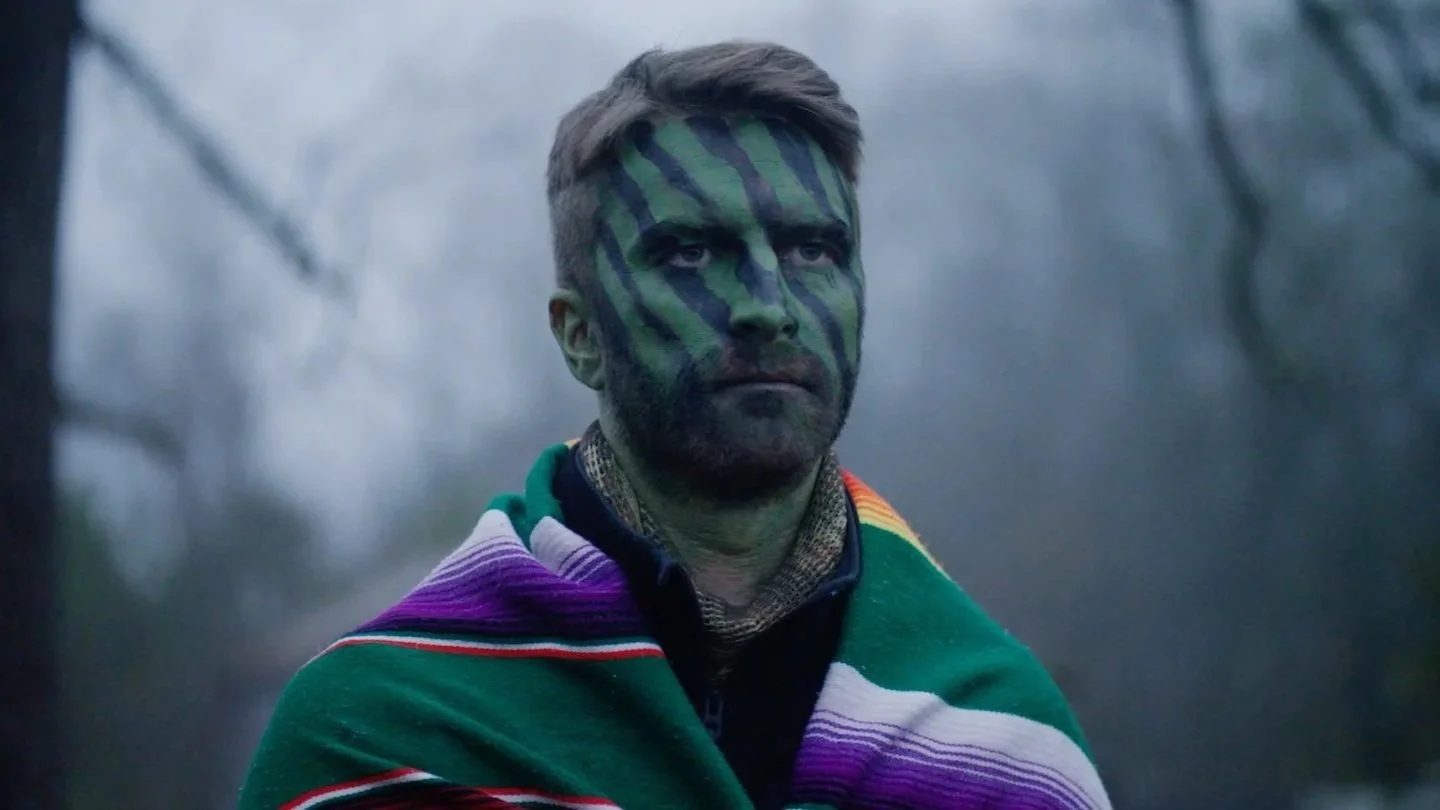
2026 / Dir. Jethro Waters
Rating: 3/5
Watch if you like: the Coen Brothers, Flannery O’Connor, tripping acid at a Civil War reenactment, losing your mind trying to make sense of the contradictions of being a contemporary southerner.
Written, directed, scored, photographed, edited, and starring Jethro Waters (under the pseudonym Braz Cubas), Gunfighter Paradise is a deeply strange microbudget tale of Stoner, a sharpshooter receiving horrifying visions he believes are from God and carrying around a case full of $7 million he received from his shady uncle. The two things are not related, he tells us, but both get him caught up in a web of weirdos ranging from lost Confederate Civil War reenactors, Christian fascist neighbors, and a hitman named Maurice who rubs car air fresheners all over his body and likes the sound of electric razors.
Full of rich symbolism and metaphors I won’t pretend to fully understand, Gunfighter Paradise reckons with modern southern identity. Stoner, who is seen day or night wearing permanent camouflage face paint, seems to be losing it after the death of his mother and his return to his family home. Through his heady voiceovers that range from deeply philosophical to the pleasures of eating a pimento cheese sandwich with a root beer, we are thrown into a world of guns, God, glory, and money. The film tackles the contradictions swirling around his head: being told the right way to worship while being raised in a culture of guns and lingering southern pride with modern American patriotism.
Gunfighter Paradise has elements of thriller and horror, but is more of a hangout movie filled with quite dry, deadpan humor that makes perfect use of a cast full of inexperienced actors that may have struggled with more naturalistic performances. Waters excels at creating odd situations and imagery, punctuating his film with surreal and hilarious moments, like when Stoner goes for a drive and every house has a guy armed to the teeth patrolling their rural home, or when Stoner pays tribute to a mummified cat by giving it bejeweled eyes.
The film drifts from encounter to encounter without much narrative propulsion, however, and can feel quite slow despite its 93-minute runtime. I found my mind wandering repeatedly until Waters would produce another wonderfully strange image, like Stoner flipping bacon with a wrench, and I’d zap back in for a bit. I do assume that, not being a southern native, there was quite a bit I missed here that may have engaged me more had I been.
That said, I do appreciate Gunfighter Paradise and what Jethro Waters was trying to do in his fiction debut (he’s previously made music videos for the likes of John Cale and directed a documentary about photographer Burk Uzzle, who makes a cameo here as Stoner’s Uncle Dean). Most microbudget films usually try and fail to imitate bigger-budget Hollywood, but Waters made himself, almost entirely, a deeply personal and odd midnight-movie experience that will definitely find fans among quirky cult movies. I’ll certainly be looking forward to whatever he decides to make next.