
Review: ‘A.I. Artificial Intelligence’ paints a bleak picture of humanity and parenthood
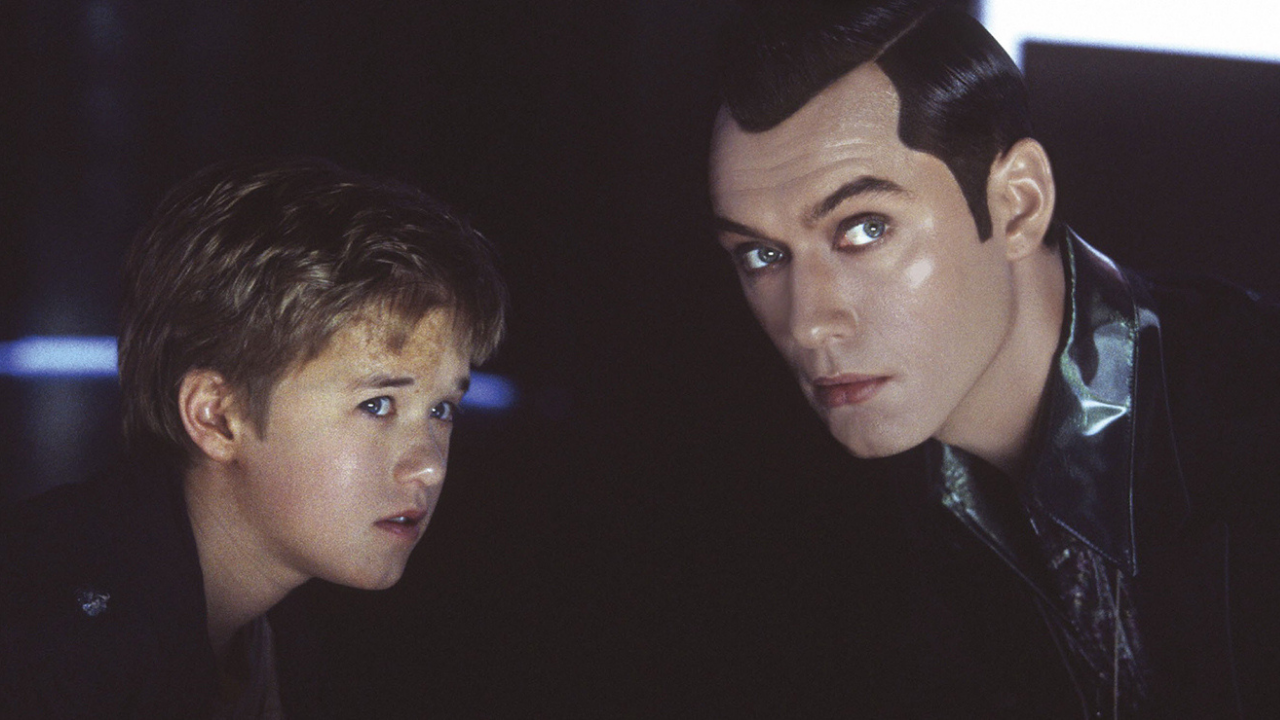
2001 / Dir. Steven Spielberg / 2026 Chicago Critics Film Festival
Rating: 4/5
Watch if you like: a blend of Steven Spielberg and Stanley Kubrick, losing your job due to AI, having deep mommy issues, and watching that video of a delivery robot getting hit by a train as the last remaining comfort in a world that makes less and less sense.
Passing through various stages of development by Stanley Kubrick since the ‘70s, A.I. Artificial Intelligence was finally made after his passing, with Steven Spielberg writing and directing based on Kubrick’s vision. Misunderstood at the time and dismissed as Spielberg sentimentality-washing a cold, dark Kubrick vision, the film has largely faded from the popular consciousness before being rediscovered as either Spielberg’s secret masterpiece or, at the very least, one of his most complicated and intricate films. Having not seen the film since its release, I revisited it for its 25th anniversary screening as part of the 2026 Chicago Critics Film Festival and found it deeply upsetting and utterly horrifying—and I can’t believe we would have gone to see this thinking it was a family sci-fi movie.
In the 22nd century, coastal cities are underwater and humanity relies on a variety of robots for resource management amid population decline. Haley Joel Osment, in one of the best child performances of all time, plays David, an 11-year-old “mecha” prototype designed to be the first robot capable of loving and dreaming. He’s been placed in the home of Henry and Monica, whose “organic” child has been cryogenically frozen until science can figure out his disease. After imprinting on him, David goes from an awkward, kind of creepy robot to totally obsessed with Monica. When their “real” son unexpectedly comes home, David is ultimately abandoned in the forest with a robotic teddy bear and navigates a nightmarish world, hoping that the Pinocchio story Monica read to him isn’t actually a fairy tale and that he can turn into a real boy. Maybe then, Monica will love him back.
A.I. is now uncomfortably close to our own world, particularly in its depiction of a split between the ultra-rich who benefit from machines and everyone else who lives in an obsolete limbo, going to flesh fairs where late-model robots are tortured in extremely graphic detail (the production design here is among Spielberg’s best realized visions). In another “I can’t believe I saw this as a kid” moment, Jude Law plays a sex robot and ends up taking David to Rouge City, an ultra-hedonistic Las Vegas city that again implies the rich get to have deep lives while the rest of us resort to cheap thrills that echo our current culture of non-stop gambling on literally everything.
Beyond the technological, many equally uncomfortable questions are raised about how much children are just toys for parents to deal with their own grief and anxieties about the world. Kids are eventually thrown into an awful world and, in many cases, continue the cycle. Spielberg effectively uses the Pinocchio fairytale frame to showcase this, twisting many of the Disney-style movie tropes of the time against the audience.
While not a movie I would want to watch again anytime soon, A.I. was certainly ahead of its time, and I can only imagine humanity’s path will mirror more and more the film’s reality in the years to come. A must-see for both Kubrick and Spielberg fans, this is a harrowing, complex journey that deserves the cinematic reappraisal.