
Review: The deceptively quiet yet powerful ‘Blue Heron’ left me speechless
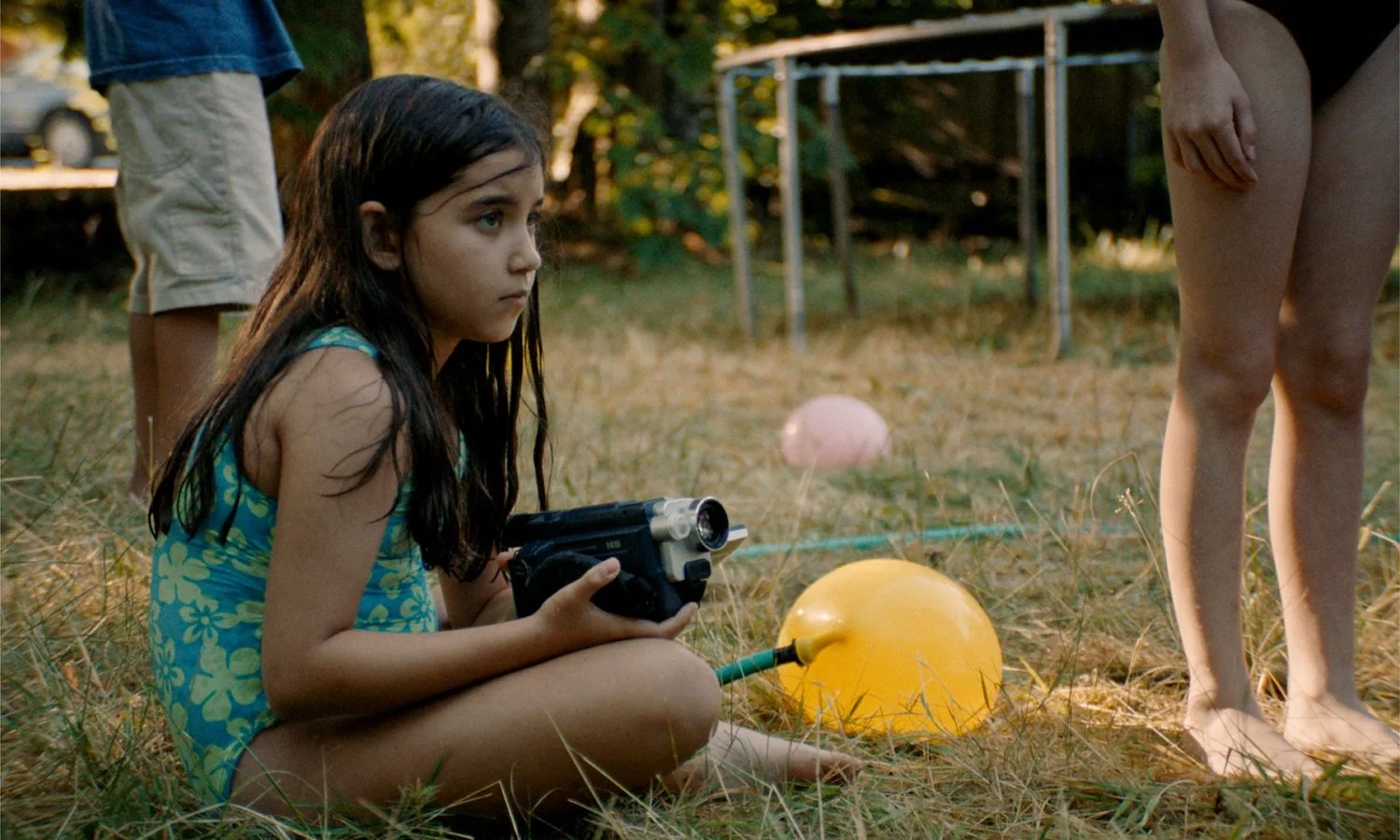
2026 / Dir. Sophy Romvari
Rating: 4.5/5
Watch if you like: Aftersun, coming-of-age summer movies, sifting through the hidden family traumas of your childhood.
How often do you replay the hard moments of your life, wondering what you could have changed for a better outcome? Does revisiting the past allow you to make peace with it, or just raise more questions? In Sophy Romvari’s feature debut, she wrestles with the same thoughts through a metafictional journey into her own past and childhood.
Blue Heron opens in the 1990s with a family—two Hungarian immigrant parents and four children—moving to a small seaside town on Vancouver Island during the summer. There’s a focus on the ambient sounds of nature and slice-of-life family moments told not exclusively, but largely through the family’s sole daughter, Sasha (Eylul Guven). For her, she’s having a normal childhood and not understanding the quick glimpses of her parents’ distress and her eldest brother Jeremy’s (Edik Beddoes) increasingly erratic behavior: shoplifting, punching windows, wandering around the roof, and coming home in handcuffs.
Romvari’s depiction of mental illness is deceptively subtle, resisting the urge for overly big or flashy moments thanks to the use of Sasha’s perspective, where we’re often seeing things through a crack in a door or through a basement window. That can make Blue Heron feel a little slow and sleepy at first until you get further in the film and realize how she’s trying to portray Sasha’s memories just like any other little kid’s. More so, this family, like any other, is trying to make it work while having their ups and downs. Jeremy is always depicted with love and care, even as his behavior, which doesn’t seem like he even understands, is pushing his helpless parents to their breaking point as they fail to get any answers from child psychologists and social workers.
A remarkable transition occurs midway through the film: the mother (Iringó Réti) is talking to an unknown person on the phone. When we cut to the other individual, it’s the adult Sasha (Amy Zimmer) talking to her mother in the present on an iPhone. Adopting a cooler tone, Sasha is making a documentary about Jeremy, and Blue Heron starts to blend more and more fact and fiction, with Sasha clearly a stand-in for the director whose short film Still Processing delved into Romvari’s literal memories. This meta-blending reaches its height in a scene in which Sasha speaks to a real group of child professionals in an unscripted sequence, asking them to review Jeremy’s 20-year-old case file to determine whether anything could have been done differently to help the family.
I won’t spoil where things go from there, only to say that a trip the adult Sasha takes to her childhood home left me speechless and shaken. Blue Heron is a deceptively quiet film that sneaks up on you with its power; if you’re like me, it won’t leave you anytime soon. Romvari had previously made about a dozen shorts over a ten-year period before filming Blue Heron, but even still, it’s incredible how accomplished this film is. There are so many interesting narrative devices it uses, and every part of its runtime ultimately feels purposeful and necessary. Like Sorry, Baby from 2025, this is going to be the quiet independent feature that sneaks onto every critic’s best-of-2026 list.