
Review: ‘Late Shift’ spotlights an overworked nurse on the brink
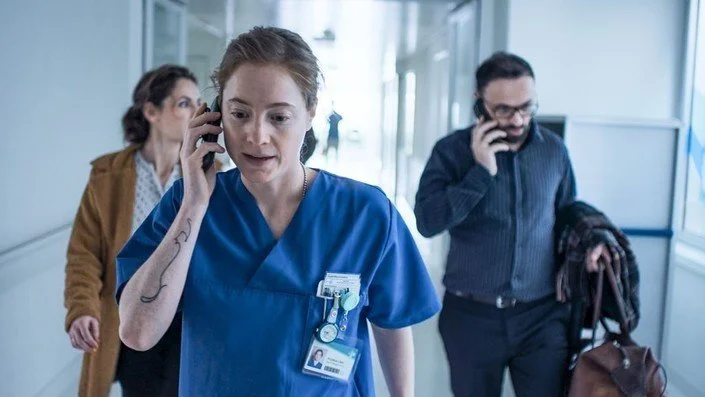
2026 / Dir. Petra Volpe
Rating: 4/5
Watch if you like: hanging out in hospitals, single-day movies, and The Pitt if it followed just one nurse the whole time who’s in desperate need of a break or at least some freakin’ backup, geez.
If The Pitt is the hot new show spotlighting America’s overburdened healthcare system through the dynamic dramas of a busy emergency department, Petra Volpe’s new Swiss-German film Late Shift is its wearier, no-nonsense European cousin who’s been a nurse for long enough to have seen it all yet keeps coming back for more.
Based on an autobiographical novel by German nurse Madeline Calvelage, the film follows a nurse named Floria (Leonie Benesch, September 5, The Teachers’ Lounge) over the course of one evening shift in the surgical ward of a Swiss hospital. The opening shot of hundreds of fresh, identical nurse scrubs flowing across a conveyor belt sets the stage as the perfect visual metaphor for how this is just another day for frontline healthcare workers like Floria and thousands of others worldwide, but also how the system they work in treats them.
In what feels like no time at all, this “just another day” for Floria entails managing an ever-growing list of patient needs as she maneuvers from room to room on her rounds, in what’s clearly an understaffed unit given how many patients are waiting on something from her. Yet the way she’s able to multitask and keep all these metaphorical plates spinning in the air with professional poise rivals any accomplished project manager—especially given the literal life-or-death stakes.
Like in one moment, she’s scrambling to prepare a patient for an imminent CT scan just as she gets a call from the daughter of a previously discharged elderly patient about retrieving the glasses her mother left behind. And then there’s the adult siblings reckoning with their elderly mother’s quick decline just a few doors down from the condescending rich asshole complaining about not getting his tea in a timely fashion. And then... and then... and then… And just when you think Floria has hit peak busyness, a red door light will pop on down the hall almost like a jump-scare, signifying a patient has hit the nurse call button with yet another need to be met. (More than once that red light had me going “Oh what now?” on Floria’s behalf.)
It’s hard to overstate how essential Benesch’s performance is to the success of this movie. She basically is the movie, given how she’s on screen for the entire 87-minute runtime, which is both a remarkable feat of stamina and a bravura display of sheer presence—and especially impressive since the film eschews any musical embellishments or ER-style dramatics to keep you hooked on what could happen next. She inhabits the weatherworn experience of a veteran nurse adept at the technical aspects of her job—like starting an IV on the first try with a patient who was skeptical it could be done—but also the trickier soft-skills parts, like how to politely stop a patient on oxygen support from smoking on the balcony. And when she finally hits a breaking point involving the aforementioned rich asshole, her vulnerability shines through in a way that’s extremely relatable to anyone trying to retain their humanity amidst inhumane circumstances.
The film’s original German title is Heldin, the German word for “hero”—an apt name for this story given how heroic Floria’s work indeed is. It also serves as a biting reference to the COVID-era paeans to “Healthcare Heroes” and essential workers who endured countless struggles on the frontlines of the pandemic without commensurate compensation or support their demanding labor deserved.
That it’s set in Switzerland—which has a healthcare system consistently ranked as one of the best in the world—is also a savvy move, as it shows that no matter where you live or how great your healthcare plan is, you’re not going to do well if your hospital doesn’t staff enough trained professionals to support its patients. The epilogue rightly spotlights the current and looming nurse shortages worldwide, but this problem (I’d argue) actually rests not with nurses themselves but with the crushing force of capitalist greed that prioritizes profit over people, even in systems that should be not-for-profit like healthcare.
Late Shift is not only a compelling work of stripped-down cinema, but also important viewing for non-medical civilians like myself who usually only experience the healthcare system from the outsider’s perspective of a patient. Whatever real flaws, failures, and frustrations exist in medicine, there’s more going on outside your own hospital room than you can see—with ordinary people doing extraordinary work.