
Review: ‘28 Years Later: The Bone Temple’ balances brutal violence and macabre whimsy
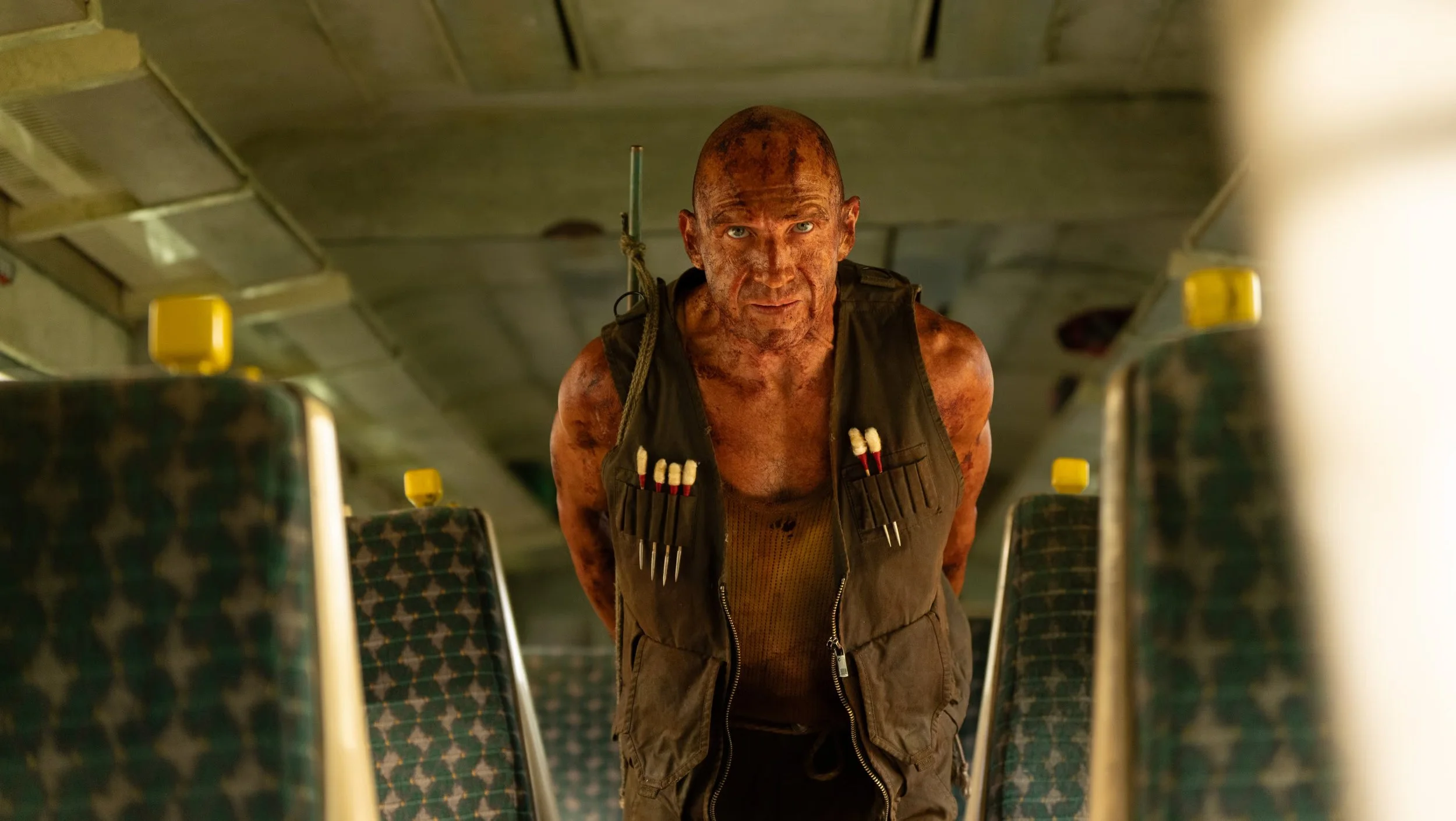
2025 / Dir. Nia DaCosta
Rating: 4/5
Watch if you like: Dancing in your bone temple with your doped-up zombie bro to Duran Duran while satanists in Adidas track suits peel the flesh of your neighbors.
When director Danny Boyle and writer Alex Garland returned for 28 Years Later, they could have easily churned out a mid-tier legacyquel, had a couple beers, and gone home with a fat paycheck. Instead, we got a deeply strange, risky, and surprisingly beautiful meditation on life and death that largely paid off. Remarkably, Nia DaCosta’s (Hedda, Candyman 2021) sequel, filmed back-to-back with 28 Years Later, is a deeply strange movie that takes a lot of risks that pay off!
If you have yet to see 28 Years Later and are curious about The Bone Temple, stop reading right now because there’s no way to discuss the new one without revealing the ridiculous ending of the previous movie. OK, last chance—because we pick up immediately after our protagonist Spike (Alfie Williams) found himself in a completely absurd cliffhanger, rescued from a zombie horde by Sir Lord Jimmy Crystal (Jack O’Connell) and his gang of identically dressed teenagers in Adidas track suits that kick ass with the most atrocious-looking blonde wigs you’ve ever seen in a movie. What a mic drop.
After his rescue, Spike is violently coerced into joining Sir Lord Jimmy’s gang of “Fingers,” who dispense malevolent acts of Satanic “charity” in service of “Old Nick.” Spike largely takes a backseat after anchoring the first movie with his time with the Jimmys spent as an act of sheer survival. It’s refreshing that Spike is never morally tempted here to follow the Jimmys brand of chaos and cruelty that can see them chatting about Teletubbies with one breath and brutally skinning someone in the next. At the same time, I hope Alfie Williams is given more to do in the sequel than he was here, as The Bone Temple delivers a satisfying entry into this universe, but doesn’t totally satisfy as a continuation of Spike’s journey.
Jack O’Connell had some brilliant performances in the 2010s in films like Starred Up and ‘71, and it’s been a real thrill to see him recently in two radically different villain performances here and as the head vampire Remmick in Sinners. Remmick brought a unique type of vampiric seduction, but Sir Lord Jimmy is fascinating in the complete opposite direction by being fascinatingly repellent.
DaCosta and returning screenwriter Garland never try to humanize the head Jimmy; instead, they show how a young man who saw his priest father turn into a zombie and return with a horde to kill his family could grow up believing he was the son of a demon and survive on an ideology of apocalypse and half-remembered British television. O’Connell plays him where you’re never totally sure if he buys his own nonsense or is totally desperate to cling to anything that makes sense of the world, even if it’s a child’s delusion.
On the opposite front, Ralph Fiennes returns as Dr. Ian Kelson, delivering another captivating performance that would easily earn him award nominations if it weren’t coming from the fourth movie in a zombie franchise. He’s an atheist to Jimmy’s fairtytale satanist, but shown to be infinitely more curious about the world as he continues to memorialize the old world through his memento mori temple while developing a curious relationship with the Alpha Zombie Sampson (Chi Lewis-Parry), who seems to enjoy visiting Dr. Kelson to get a regular dose of a morphine-based tranquilizer that allows him to chill out, take a break from ripping out spines with his pack of infected naked people, and dance to Duran Duran (yes, literally).
Watching The Bone Temple, I wasn’t quite sure what to make of its parallel stories and its balancing of brutal, unpleasant violence with the macabre whimsy of Dr. Kelson’s adventures with Samson or even the look of the Jimmys. You may have that feeling, too, but rest assured that both threads collide and cohere in a wonderfully outrageous sequence that I won’t spoil, other than to say it caused our whole theater to cheer when it ended.
DaCosta’s confident direction is a major factor in keeping The Bone Temple from crashing under the weight of its many tones. Continuing to collaborate with cinematographer Sean Bobbitt, the two have enough visual nods that fit in with the series while dialing back from the iPhone experimentalism of the last film. Using longer takes and more classical compositions helps balance the script’s tonal shifts and provides grounding. That’s not to mention pulling off at least three major breathtaking sequences that keep replaying in the back of my mind days after seeing them.
Saddled with both delivering a middle chapter in a trilogy as well as the third sequel in a long-running series, The Bone Temple manages to sidestep any baggage, delivering both a confident continuation of the ongoing world-building, an adventurous self-contained story, and Nia DaCosta’s most realized project to date. Most importantly, 28 Years Later and this sequel prove it’s possible to be original and still work within the confines of a long-running series. Any studio planning to dust off old IP going forward should look to these movies and give up nostalgia-bait legacyquels forever.